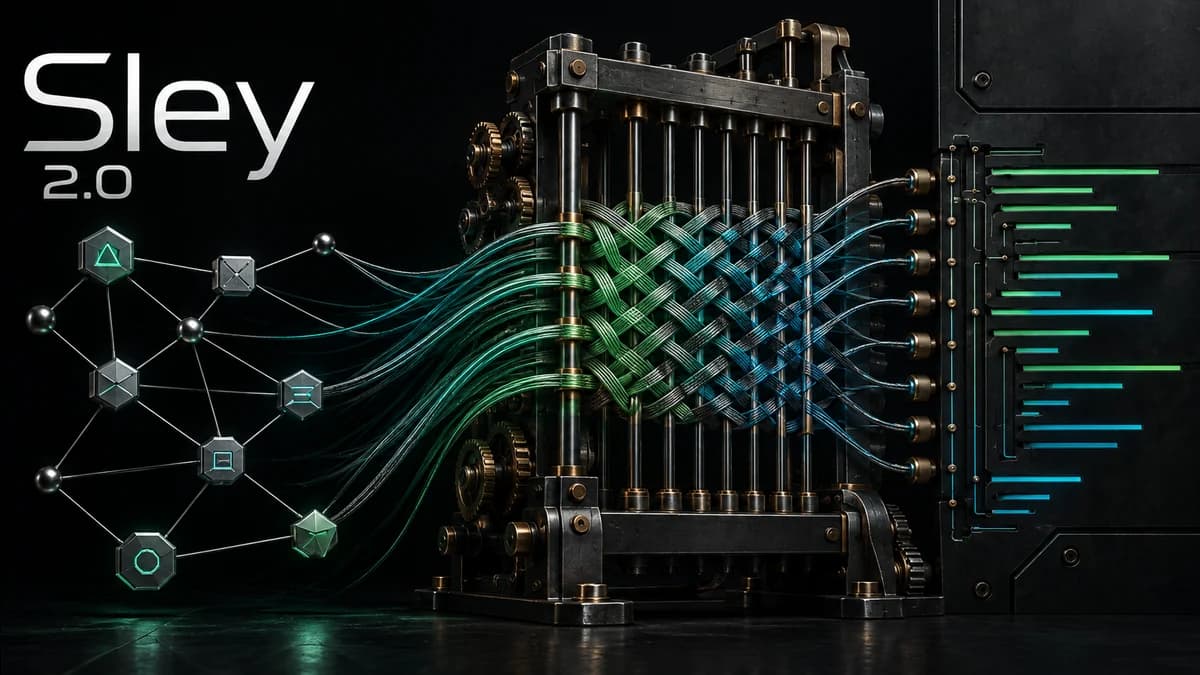
Flagship 01 / Sley
Software change, made structural.
Sley gives autonomous software a structural view of a program before modification, then keeps intent, authority, and verification visible to human reviewers.

module app.compute
task classify -> Text {
take score: Int
return if score >= 90 { "excellent" } else { "steady" }
}
task main -> Text {
bind score = 40 + 55
return call classify(score)
}Source is the entry point
Readable syntax. Structural reports. Separate authority.
This example is real Sley source from the public repository. Its call structure can be queried before any write is authorized.
Why it exists
Text is not the whole program.
Conventional editing asks a system to infer structure from text, change it, and explain the result afterward. Sley makes structure part of the language surface before mutation begins.
sley query --json --kind calls examples/project
"schema": "sley.query.report.v0"
"kind": "calls"
"entry_module": "app.main"
"modules": 2, "calls": 1
- 01Inspect structure
- 02Plan transformation
- 03Authorize scope
- 04Verify evidence
- local v1 checks
- 23 / 23
- report schemas
- 42
- contract fixtures
- 128
- corpus cases
- 66
- integration checks
- 199
Public checkpoint recorded August 22, 2026. Later worktree state may differ.
What systems can inspect
- Typed structural nodes and relationships
- Declared intent and transformation boundaries
- Available capabilities before a write
- Deterministic reports and verification results
What people retain
- Readable source and an explicit proposed change
- Authority over whether the proposal may execute
- A reviewable boundary between reports and mutation
- Evidence tied to the exact checkpoint being discussed